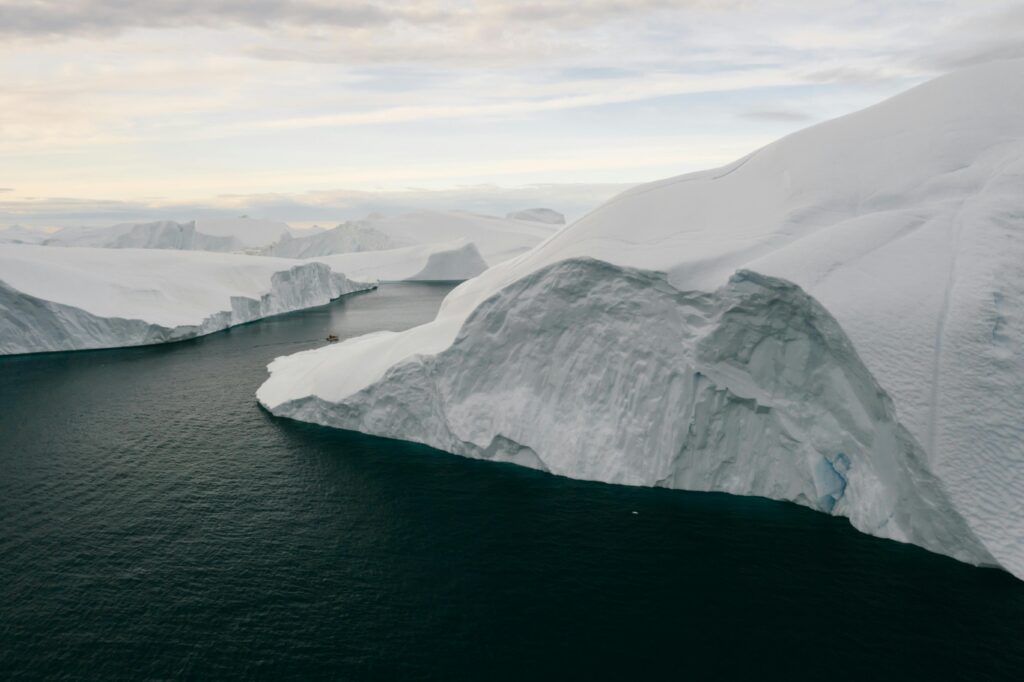

Seventy percent of Earth’s surface is covered in water. This comprises a substantial part of Planet Earth’s biodiversity and ecosystem. Human animals, for a while now, have played an outsized role in the food chain.
Delicious plant-based alternatives to animal-derived foods, and yes, this includes ocean and freshwater-dwellers, allow humans to lessen our overwhelming impacts on Earth’s biodiversity and ecosystem. These human-caused impacts would be impossible were human-developed tools and inventions nonexistent.
Humans have theoretically evolved to become inventors, in the same way macroscopic and microscopic organisms that contribute to Earth’s biodiversity have evolved to protect and foster the possibility of human life on Earth.
Humans’ overfishing of macroscopic sea creatures inherently implies that humans, in part, rely on these sentient macroscopic fish for sustenance. These fish, by and large, grow themselves, unlike land-based, factory-farmed animals. Fish are also factory-farmed, although, unlike land-based animals, they are not commonly inseminated as a widespread practice.
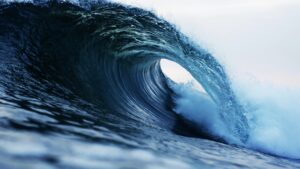
Overfished sea creatures rely on natural spawning in an animalistic survival attempt to reproduce, and therefore, it’s easy to imagine the magnitude and scale of aquaculture required to overfish to the tune of billions of fish.
The Vegan Digest recommends, if you haven’t watched the film “Seaspiracy” yet or haven’t developed sympathy for what human employees are required to do for profit-seeking, “Big Agriculture” employers, that you please watch it with an open mind. Its exposé on how our planet’s sea-dwelling victims are harmed, in unnatural food chain cycles, is well-produced.
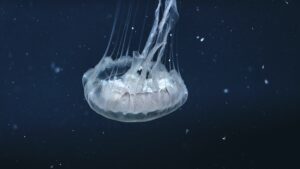
Other human failings, such as a lack of circular design for many of our consumer products, as well as the commercialization of recycling with low recycling success rates, create human waste that accumulates in the oceans and ecosystem.
Circular design is a fully fleshed-out theoretical practice, championed by thought leaders including the Ellen MacArthur Foundation, that allows humans to avoid inadvertent harm to our helpful sea-dwelling creatures, and consequently, irreparable harm to Earth’s ecosystem. Circular design is a possible solution to over-recycling; a phenomenon that affects the effectiveness of a consumer’s voluntary efforts to recycle commercial products.