Our world is made of matter. This includes everything macroscopic that we can see and the microscopic things we see using man-made tools. This includes the air we breathe, the water we drink, and more.
Air is a mixture of various gases, primarily nitrogen and oxygen, along with smaller amounts of other gases and particles like dust and water vapor. Even though gas molecules in the air are spread out, the space between them is not truly empty.
The Vegan Digest invites you to think of the air within our planet’s ozone layer and even beyond through to the exosphere, where space is considered to gradually begin, as a type of “ocean” comprised primarily of gas rather than water.
The ozone layer is the layer within Earth’s atmosphere that protects humans from harmful sun rays and protects our ecosystem. If we think of our atmosphere as an “ocean,” then we don’t want bad stuff mixing in our waters, nor do we want less usable water in that ocean. The burning of fossil fuels, such as coal, oil, and natural gas, pollutes our atmosphere with trapped heat and radiation, creating a greenhouse effect.
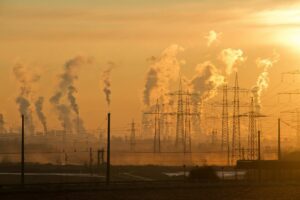
The greenhouse effect is, in summary, a harmful warming of Earth’s surface and an increasingly worsening ratio of oxygen to other gases harmful to humans. As of 2025, Britannica published that our brief Industrial Revolution through the year 2000 has seen the amount of carbon dioxide and methane in the atmosphere increase by 30% and 100%, respectively.
Fossil fuels, such as coal, petroleum oil, and natural gas, are derived from carbon. They are nonrenewable because it takes millions of years for them to accumulate from dead organic matter. We use these resources to enable transportation, heat and cool our homes, generate electricity, produce plastics, and more. Fossil fuels are also a major part of human food-production systems.
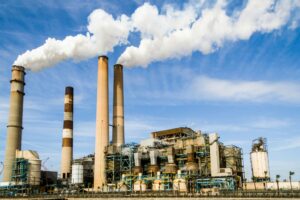
Beyond the carbon dioxide and methane released from the burning of fossil fuels, the depletion of these accumulated resources poses a risk to the availability of their benefits. Humans need renewable energy innovations with practical use applications that can replace the immense benefits of fossil fuels, if we aspire to exist as long as the dinosaurs did and as long as plants have.
The Vegan Digest believes that it is important to remember that all organic matter is carbon-based and that the planet doesn’t require humans in order to function. Some examples of carbon-based organic matter include humans, other animals, including fish, and plants. Carbon deposits have accumulated over billions of years, since pre-dinosaur eras. Some carbon deposits include dinosaur decomposition.
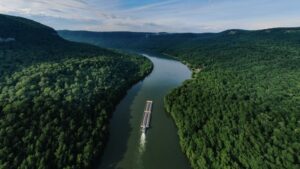
The carbon cycle is essential in order to allow Earth to be habitable for human life. It regulates Earth’s temperature because it balances carbon dioxide and other gases in the atmosphere. Rock and sediment basins trap carbon dioxide in layers and help form bodies of water to foster diverse life. This includes plant life.
Plants absorb carbon dioxide from the atmosphere and release oxygen as a byproduct of photosynthesis. While humans need more plants as we continue to rely on the burning of fossil fuels for our current quality of human life, there is widespread deforestation across Earth. This includes the world’s largest forest, the Amazon rainforest, located in South America. Even the ‘quality-of-life’ benefits from fossil fuel burning and deforestation aren’t evenly distributed across Earth’s population.
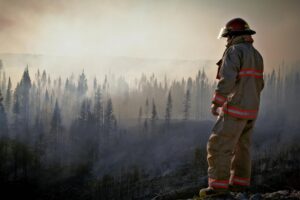
Deforestation leads to the extinction of many species and the depletion of the plants that we know are helpful to humans on Earth. It’s obvious that the millions of square miles used to feed livestock and to farm crops could be used to grow sustainable sources of plant-based, delicious, and nutritious food for humans. This is possible without the need for animals that never see freedom or animals that eat more pounds of food than they eventually provide.
Since current deforestation practices are significantly driven by agricultural and farming expansion, we humans are able to choose to preserve these terrains that help protect human life. These forests take decades, and even centuries, to form.